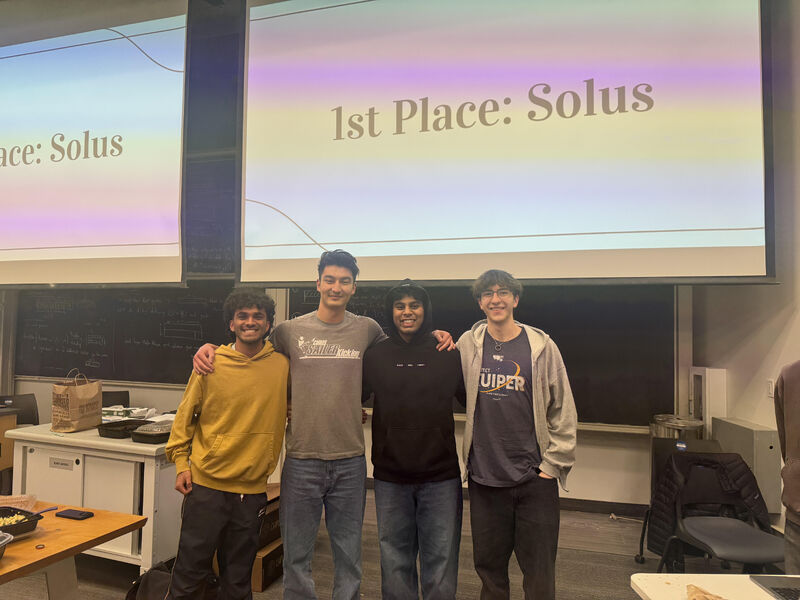
Last Saturday, we achieved 1st place out of 20 teams at VentureHacks, hosted by Carnegie Mellon University and Felicis. We were awarded $2,500 and a coffee chat with Felicis partners.
What Changed Since the Last Hackathon
In our previous hackathon, we pitched an idea for an AI that comprehends the full context of robotics development across software, electronics, and hardware. Since then, we conducted further customer discovery with robotics developers from various backgrounds, including researchers at universities like CMU, Waterloo, and Berkeley, as well as engineers at robotics startups and Tesla. Some of these developers even assisted us in piloting our application to refine our MVP.
We thought we understood the full scope of the problem. We didn't. Across every interview, every lab, every pilot, the same gap kept coming up that reframed the way we thought about this. They need something that runs where the robot runs, whether that's on the actual machine or in simulation, that can interact with their stack in real time and diagnose the integration issues that eat up most of their development time.
That's the gap. Nobody has a tool that watches your robot run, understands what's happening across the software, the electronics, and the hardware, and helps you fix problems without stopping everything and starting the debug cycle from scratch.
What We Built
We figured this out the day before the hackathon. So we designed the architecture that night and built the MVP the next day. We connected a real robot, streamed live telemetry, detected a PID tuning bug from the sensor data, diagnosed the root cause, generated corrected firmware, and flashed the fix to the robot. All from one application. Without the robot ever stopping.
That's what this new feature in Solus does. Visualize your robot. Diagnose it. Fix it. Redeploy. All in real time.
Thank You
We extend our gratitude to Felicis, David Chung, Aarush Agarwal, and Jennifer Wang for hosting this hackathon, which allows builders like us to accelerate development on specific problems and features.
We also want to thank our teammates Benton Tameling and Vaibhav Karanam for their contributions, which made our feature and presentation come together seamlessly.
What's Next
We're traveling to SF to meet with angels, accelerators, and potential customers. The robotics industry is growing fast but the development tools haven't kept up. If you're building or investing in the robotics space, reach out at pmadaram@andrew.cmu.edu.